Cardiology

What is Peripheral Artery Disease? Symptoms, Diagnosis, and Treatment

What is Peripheral Artery Disease? Symptoms, Diagnosis, and Treatment

··9 mins
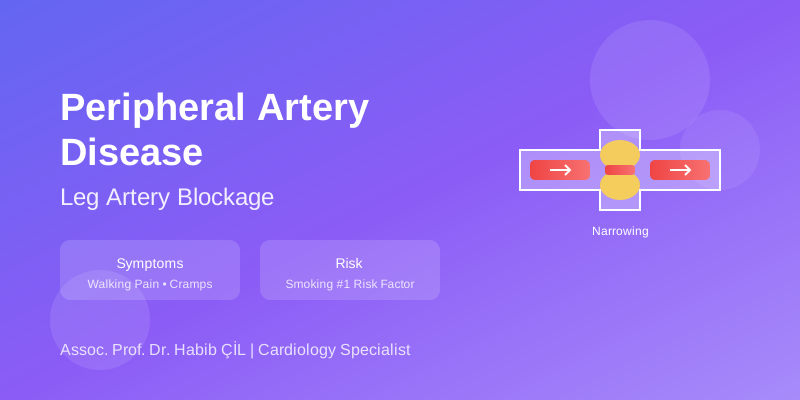
This content has been prepared for informational purposes to protect public health, in compliance with the regulations of the Ministry of Health of the Republic of Turkey and medical ethical rules. It does not provide any diagnosis, treatment guarantees, or specific medical advice. Please consult a qualified healthcare provider for the most accurate information. Peripheral artery disease (PAD) is a serious circulatory disorder that occurs when arteries in the legs and arms narrow or become blocked. This condition, which usually develops due to atherosclerosis (hardening of the arteries), can prevent serious complications with early diagnosis and appropriate treatment. In this comprehensive guide, I will discuss in detail what peripheral artery disease is, its symptoms, risk factors, diagnostic methods, and treatment options. What is Peripheral Artery Disease? # Peripheral artery disease is a condition where arteries outside the heart and brain narrow or become blocked. It most commonly affects leg arteries but can also affect arteries going to the arms, stomach, kidneys, and other organs. The disease usually develops as a result of atherosclerosis, a process where fatty plaques accumulate on artery walls.

What is Diabetic Foot? Symptoms, Treatment, and Prevention Methods

What is Diabetic Foot? Symptoms, Treatment, and Prevention Methods

··17 mins
This content has been prepared for informational purposes to protect public health, in compliance with the regulations of the Ministry of Health of the Republic of Turkey and medical ethical rules. It does not provide any diagnosis, treatment guarantees, or specific medical advice. Please consult a qualified healthcare provider for the most accurate information. Diabetic foot is a serious complication that develops in diabetic patients and affects the feet. This condition, resulting from the combination of nerve damage (neuropathy) and vascular disease (vasculopathy), significantly increases the risk of wound formation, infection, and amputation. But the good news is that the vast majority of diabetic foot complications are preventable! In this comprehensive guide, I will discuss in detail what diabetic foot is, risk factors, symptoms, treatment methods, and most importantly, how it can be prevented. What is Diabetic Foot? # Diabetic foot describes a series of complications affecting the feet in diabetic patients. Prolonged high blood sugar leads to two main problems in the body:
Mitral Valve Disease - Stenosis and Regurgitation Treatment

Mitral Valve Disease - Stenosis and Regurgitation Treatment

This content has been prepared for informational purposes to protect public health, in compliance with the regulations of the Ministry of Health of the Republic of Turkey and medical ethical rules. It does not provide any diagnosis, treatment guarantees, or specific medical advice. Please consult a qualified healthcare provider for the most accurate information. Mitral valve disease is dysfunction of the valve between the left atrium and left ventricle. It has two main forms: mitral stenosis and mitral regurgitation.
Balloon Valvuloplasty - Percutaneous Valve Dilation

Balloon Valvuloplasty - Percutaneous Valve Dilation

This content has been prepared for informational purposes to protect public health, in compliance with the regulations of the Ministry of Health of the Republic of Turkey and medical ethical rules. It does not provide any diagnosis, treatment guarantees, or specific medical advice. Please consult a qualified healthcare provider for the most accurate information. Balloon valvuloplasty is a procedure to dilate a narrowed heart valve using a balloon catheter. It is an effective treatment method especially for mitral and pulmonary valve stenosis.
Aortic Valve Disease - Stenosis and Regurgitation Treatment

Aortic Valve Disease - Stenosis and Regurgitation Treatment

This content has been prepared for informational purposes to protect public health, in compliance with the regulations of the Ministry of Health of the Republic of Turkey and medical ethical rules. It does not provide any diagnosis, treatment guarantees, or specific medical advice. Please consult a qualified healthcare provider for the most accurate information. Aortic valve disease is dysfunction of the valve between the left ventricle and aorta. It has two main forms: aortic stenosis and aortic regurgitation.
Surface Echocardiography (TTE): Heart Ultrasound Guide

Surface Echocardiography (TTE): Heart Ultrasound Guide

··3 mins
This content has been prepared for informational purposes to protect public health, in compliance with the regulations of the Ministry of Health of the Republic of Turkey and medical ethical rules. It does not provide any diagnosis, treatment guarantees, or specific medical advice. Please consult a qualified healthcare provider for the most accurate information. Surface echocardiography (transthoracic echocardiography - TTE) is a heart ultrasound examination performed through the chest wall. It is a non-invasive and painless imaging method. This comprehensive guide covers echocardiography indications, procedure process, and evaluation parameters in detail. What is Surface Echocardiography? # Surface echocardiography is an imaging method that evaluates heart structure and function using ultrasound waves. It is a non-invasive and painless examination.
PTCA - Percutaneous Coronary Balloon Angioplasty Guide

PTCA - Percutaneous Coronary Balloon Angioplasty Guide

··3 mins
This content has been prepared for informational purposes to protect public health, in compliance with the regulations of the Ministry of Health of the Republic of Turkey and medical ethical rules. It does not provide any diagnosis, treatment guarantees, or specific medical advice. Please consult a qualified healthcare provider for the most accurate information. PTCA (Percutaneous Transluminal Coronary Angioplasty) is the widening of coronary artery stenoses with a balloon. It forms the foundation of modern coronary interventions. This comprehensive guide covers the history, indications, and current applications of PTCA in detail. What is PTCA? # PTCA is the widening of coronary artery stenoses with a balloon at the catheter tip. It was first performed by Andreas Grüntzig in 1977.
PCI - Percutaneous Coronary Intervention: Stent Treatment Guide

PCI - Percutaneous Coronary Intervention: Stent Treatment Guide

This content has been prepared for informational purposes to protect public health, in compliance with the regulations of the Ministry of Health of the Republic of Turkey and medical ethical rules. It does not provide any diagnosis, treatment guarantees, or specific medical advice. Please consult a qualified healthcare provider for the most accurate information. PCI (Percutaneous Coronary Intervention) is the catheter-based treatment of coronary artery disease. It includes balloon angioplasty and stent implantation. This comprehensive guide covers PCI types, indications, procedure process and results in detail. What is PCI? # PCI is the opening of stenoses or occlusions in coronary arteries via catheter. It is a minimally invasive treatment alternative to open heart surgery.
Coronary Angioplasty and Stent: Complete Vessel Opening Procedure Guide

Coronary Angioplasty and Stent: Complete Vessel Opening Procedure Guide

··4 mins
This content has been prepared for informational purposes to protect public health, in compliance with the regulations of the Ministry of Health of the Republic of Turkey and medical ethical rules. It does not provide any diagnosis, treatment guarantees, or specific medical advice. Please consult a qualified healthcare provider for the most accurate information. Coronary angioplasty is the procedure of opening blocked or narrowed coronary arteries using balloon and stent. Also known as percutaneous coronary intervention (PCI), this treatment plays a life-saving role in treating heart attacks and angina. This comprehensive guide covers all stages of the coronary angioplasty procedure in detail. What is Coronary Angioplasty? # Coronary angioplasty is the procedure of opening narrowed or blocked coronary arteries via catheter. During the procedure, a thin balloon catheter is inserted into the vessel, inflated to widen the stenosis, and usually a stent (metal mesh) is placed to keep the vessel open.
Cardiac Stent: Drug-Eluting Stent Implantation Guide

Cardiac Stent: Drug-Eluting Stent Implantation Guide

··3 mins
This content has been prepared for informational purposes to protect public health, in compliance with the regulations of the Ministry of Health of the Republic of Turkey and medical ethical rules. It does not provide any diagnosis, treatment guarantees, or specific medical advice. Please consult a qualified healthcare provider for the most accurate information. A cardiac stent is a metal mesh structure placed to keep coronary arteries open after stenosis. It is widely used in the treatment of coronary artery disease. This comprehensive guide covers stent types, implantation procedure, and post-stent care in detail. What is a Cardiac Stent? # A cardiac stent is a cylindrical metal mesh that keeps the vessel open after balloon angioplasty. It adheres to the vessel wall and prevents recurrence of stenosis.