Blog
  1. Home /
  2. Blog

Blog

Important topics you need to know about your heart health and preventive health recommendations.

In the following articles, you can find information about heart diseases, symptoms, treatment methods and preventive measures.

What is Cardiomyopathy? Types, Symptoms, and Treatment Options

What is Cardiomyopathy? Types, Symptoms, and Treatment Options

··9 mins
This content has been prepared for informational purposes to protect public health, in compliance with the regulations of the Ministry of Health of the Republic of Turkey and medical ethical rules. It does not provide any diagnosis, treatment guarantees, or specific medical advice. Please consult a qualified healthcare provider for the most accurate information. Cardiomyopathy is a serious group of diseases that affects the structure and function of the heart muscle. This condition, which weakens the heart’s ability to pump blood, can be controlled with early diagnosis and appropriate treatment. In this comprehensive guide, I will discuss in detail what cardiomyopathy is, its different types, symptoms, diagnostic methods, and current treatment approaches. What is Cardiomyopathy? # Cardiomyopathy literally means “heart muscle disease.” This term describes a group of conditions in which the heart muscle (myocardium) shows abnormal structure or function. In cardiomyopathy, the heart muscle may thicken, stiffen, thin, or be replaced by abnormal tissue. These changes reduce the heart’s ability to pump blood effectively.
Heart Failure: Symptoms, Diagnosis and Treatment Options

Heart Failure: Symptoms, Diagnosis and Treatment Options

··8 mins
This content has been prepared for informational purposes to protect public health, in compliance with the regulations of the Ministry of Health of the Republic of Turkey and medical ethical rules. It does not provide any diagnosis, treatment guarantees, or specific medical advice. Please consult a qualified healthcare provider for the most accurate information. Heart failure is a condition where the heart cannot pump enough blood to meet the body’s needs. Affecting millions worldwide, this chronic condition can be managed with early diagnosis and appropriate treatment. This comprehensive guide covers the symptoms, causes, diagnostic methods, and current treatment options for heart failure. What is Heart Failure? # Heart failure occurs when the heart’s pumping function is impaired, preventing organs and tissues from receiving adequate blood and oxygen. This condition is also known as “congestive heart failure” because it often presents with fluid accumulation (congestion) in the body.
Coronary Artery Disease: Causes, Symptoms and Treatment Methods

Coronary Artery Disease: Causes, Symptoms and Treatment Methods

··8 mins
This content has been prepared for informational purposes to protect public health, in compliance with the regulations of the Ministry of Health of the Republic of Turkey and medical ethical rules. It does not provide any diagnosis, treatment guarantees, or specific medical advice. Please consult a qualified healthcare provider for the most accurate information. Coronary artery disease (CAD) is one of the leading causes of death worldwide. This condition develops due to narrowing or blockage in the arteries that supply the heart and can be controlled with early diagnosis and treatment. This comprehensive guide examines the causes, symptoms, diagnostic methods, and current treatment options for coronary artery disease. What is Coronary Artery Disease? # Coronary arteries are blood vessels that carry oxygen and nutrients to the heart muscle (myocardium). Coronary artery disease occurs when plaque buildup due to atherosclerosis (hardening of the arteries) causes narrowing or blockage in these vessels.
Cardiac Arrhythmias: Types, Symptoms and Treatment

Cardiac Arrhythmias: Types, Symptoms and Treatment

··7 mins
This content has been prepared for informational purposes to protect public health, in compliance with the regulations of the Ministry of Health of the Republic of Turkey and medical ethical rules. It does not provide any diagnosis, treatment guarantees, or specific medical advice. Please consult a qualified healthcare provider for the most accurate information. Cardiac arrhythmias are conditions that develop when the heart’s normal electrical conduction system is disrupted. The heart may beat too fast, too slow, or irregularly. This comprehensive guide examines different types of arrhythmias, their symptoms, diagnostic methods, and current treatment options. What is a Cardiac Arrhythmia? # Normal heart rhythm is regulated by electrical impulses originating from the sinus node. These impulses spread to the heart chambers, enabling coordinated contraction. Normal resting heart rate is 60-100 beats per minute.
What is Atrial Fibrillation (AFib)? Symptoms, Causes, and Treatment

What is Atrial Fibrillation (AFib)? Symptoms, Causes, and Treatment

··8 mins
This content has been prepared for informational purposes to protect public health, in compliance with the regulations of the Ministry of Health of the Republic of Turkey and medical ethical rules. It does not provide any diagnosis, treatment guarantees, or specific medical advice. Please consult a qualified healthcare provider for the most accurate information. Atrial fibrillation (AFib) is the most common heart rhythm disorder worldwide and increases stroke risk by 5 times. Characterized by irregular and rapid contractions of the heart’s upper chambers (atria), this condition can be successfully managed with early diagnosis and appropriate treatment. In this comprehensive guide, I’ll discuss what AFib is, how to recognize it, risk factors, and current treatment approaches. What is Atrial Fibrillation? # Atrial fibrillation is a condition where the heart’s upper chambers (atria) exhibit irregular and usually very rapid (300-600 beats per minute) electrical activity. These chaotic electrical signals are transmitted irregularly to the lower chambers (ventricles), resulting in an irregular and often rapid heartbeat.
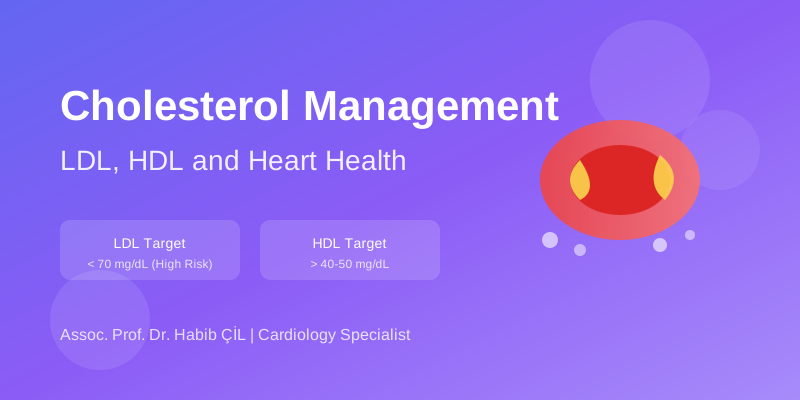
Cholesterol Management: Causes, Risks, and Treatment of High Cholesterol

Cholesterol Management: Causes, Risks, and Treatment of High Cholesterol

··7 mins
This content has been prepared for informational purposes to protect public health, in compliance with the regulations of the Ministry of Health of the Republic of Turkey and medical ethical rules. It does not provide any diagnosis, treatment guarantees, or specific medical advice. Please consult a qualified healthcare provider for the most accurate information. High cholesterol is one of the most important risk factors for cardiovascular diseases such as heart attacks and strokes. This condition, which often threatens vascular health for years without symptoms, can be successfully controlled with early diagnosis and appropriate treatment. In this comprehensive guide, I’ll discuss what cholesterol is, why it matters, risk factors, and effective management strategies. What is Cholesterol? # Cholesterol is a waxy, fat-like substance found in every cell of our body. Despite its bad reputation, it’s actually essential for life:
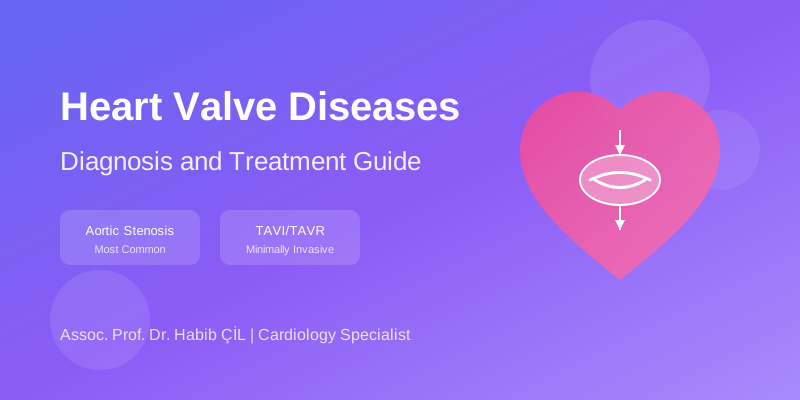
Heart Valve Diseases: Symptoms, Diagnosis, and Treatment

Heart Valve Diseases: Symptoms, Diagnosis, and Treatment

··7 mins
This content has been prepared for informational purposes to protect public health, in compliance with the regulations of the Ministry of Health of the Republic of Turkey and medical ethical rules. It does not provide any diagnosis, treatment guarantees, or specific medical advice. Please consult a qualified healthcare provider for the most accurate information. Heart valve diseases occur when one or more of the heart’s four valves don’t function properly. Valves can become narrowed (stenosis), fail to close completely (regurgitation), or both. With early diagnosis and appropriate treatment, the vast majority of patients can continue their normal lives. In this article, I’ll discuss the types of heart valve diseases, symptoms, diagnostic methods, and current treatment options in detail. Heart Valves and Their Functions # The heart consists of four chambers (two atria, two ventricles) and four valves. Valves act as one-way gates that ensure blood flows in one direction:
Heart Attack Symptoms: Early Detection Saves Lives

Heart Attack Symptoms: Early Detection Saves Lives

··10 mins
This content has been prepared for informational purposes to protect public health, in compliance with the regulations of the Ministry of Health of the Republic of Turkey and medical ethical rules. It does not provide any diagnosis, treatment guarantees, or specific medical advice. Please consult a qualified healthcare provider for the most accurate information. A heart attack is a serious, life-threatening condition that occurs when blood flow to the heart muscle is suddenly blocked. Every year, hundreds of thousands of people worldwide experience heart attacks, and many of these could have been prevented with early detection and proper intervention. In this comprehensive guide, I’ll explain what a heart attack is, how to recognize the warning signs, and the life-saving steps you should take in an emergency. What is a Heart Attack? # A heart attack, medically known as myocardial infarction, occurs when one or more of the coronary arteries that supply blood to the heart muscle becomes blocked. Our heart is a muscular pump that continuously works to circulate blood throughout our body, and like any other muscle, it requires a constant supply of oxygen and nutrients to function properly. This supply comes through the coronary arteries.
What is Hypertension (High Blood Pressure)?

What is Hypertension (High Blood Pressure)?

··9 mins
This content has been prepared for informational purposes to protect public health, in compliance with the regulations of the Ministry of Health of the Republic of Turkey and medical ethical rules. It does not provide any diagnosis, treatment guarantees, or specific medical advice. Please consult a qualified healthcare provider for the most accurate information. Hypertension is one of the most common chronic diseases worldwide and a leading cause of serious health problems such as heart attacks, strokes, and kidney failure. It’s called the “silent killer” because it can cause organ damage over years without any noticeable symptoms. In this comprehensive guide, I’ll discuss what hypertension is, how to recognize it, the risk factors involved, and effective treatment approaches. What is Hypertension? # Hypertension is a condition where blood pressure consistently remains above normal levels. Blood pressure is the force that blood exerts on the walls of arteries as the heart pumps it through the body. This pressure is expressed as two values: